top of page


CHAPTER 4: COMPUTER-GENERATED LIMINALITY AND VIRTUAL EMBODIMENT
Virtuality, understood as existing in a way of being imagined and considered rather than existing in a way that is physically real (Cambridge Dictionary 2023, virtuality entry), is key to the thinking around the conceptual relevance of CYBERROT. Rather than attempting to be of reality, this project focuses on blurring these lines between real and digital, in considering the digital space as an ‘abstract space in-between realms’, a liminal state where cross-pollination occurs between digital reality and “real” reality (Strutt 2020:81).
The importance of the digital/virtual to this project stems from Daniel Strutt’s discussion of the embodied effects of the digital image, these being ‘of flying, floating, swarming, morphing, and glitching’ (Strutt: 2020:9). This state of immersion reflects the sense of disembodied experienced in dissociative episodes. Ralph Moseley suggests that new technologies carry the ability to ‘facilitate the transference’ between mental states through deep immersion (Moseley 2019:549). These effects are explored within the work first through creating three-dimensional depth to the virtual spaces to provide the effect of ‘corporeal presence’ (Strutt 2020:131) and through the animations simulating human movement through the space. Second, through immersive technology: screen-based and data projection installation and VR head-mounted display (HMD) experiences to devise a liminal experience.
Part of this inquiry stems from dystopian, science fiction, and techno-horror media exploring the connections between reality, technology, and consciousness. Ryūtarō Nakamura’s short anime series Serial Experiments: Lain explores the boundaries between reality and cyberspace through a ‘virtual realm called the Wired’ (Khoury 2023). A software system called ‘Protocol Seven’ is run through the Wired with the intent to ‘reunite everyone’s consciousness into one’ which would render the need for ‘a “self” or flesh identity’ useless (Khoury 2023). In each episode, there is a faint electrical buzzing in the background, considered to be the ‘sound of Wi-Fi' (Charity 2018), reinforcing the idea of constant connection to the Wired and the lack of bounds between virtual and real.
Figure 26: Ryūtarō Nakamura (1998) Serial Experiments: Lain, Layer 11 [video], YouTube.

Figure 27: Tsutomu Nihei (1997) Blame! [image], Rehnwriter website.
In a similar kind of dystopian universe, Tsutomu Nihei’s BLAME! is a manga series taking place in an endlessly growing ‘cavernous, rotting technological spaces’, a giant industrial labyrinth that has taken over all of Earth and wiped out most of humanity (Yegulalp 2016). The exact size is unknown, but Nihei suggests its diameter to be ‘at least that of Jupiter’s orbit, or about 1.6 billion kilometers’ (Tsutomu Nihei wiki 2008).
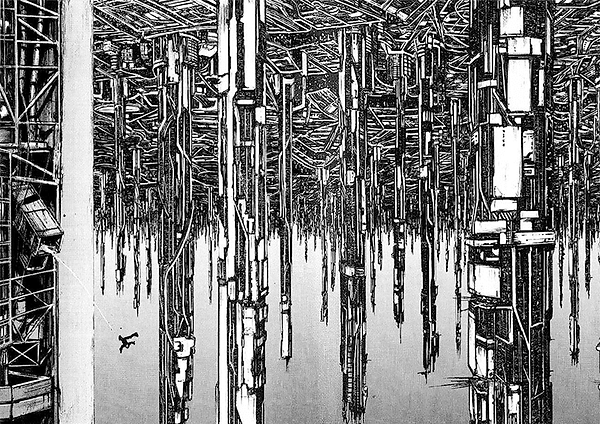
The narrative of CYBERROT, although a backdrop to the experience, is based on similar science fiction concepts: a digital consciousness endlessly creating digital hallucinations straying far from any notion of an outside reality. The environments of CYBERROT are intended to appear vast and larger-than-life and continuously expanding. This idea is conveyed in the work through text and code stating the system is “loading alternate layers” and “reality settings deleted”.
Figure 28: Tsutomu Nihei (1997) Blame! [image], Rehnwriter website.
Each iteration of CYBERROT is intentionally transparent as being digitally made and presented. All technology used within the installation, screens, data projectors, speakers, electrical cords, and power boards are visible. This is highlighted as a visceral aspect of presenting the “innards” and connections of the devices, as well as being thematically connected to the visuals being displayed. Layer 000 Loading Zone and Layer 001 Central Orb System display cords connecting them through the portal, implying a physical connection to the orb, the concept as it has been stated the orb is the brain that controls and creates the layers of digital hallucination.

The looping cycles in this project are informed by horror tropes, particularly the trend started by P.T, the playable teaser for the cancelled Silent Hills game, and the YouTube short film My House Walkthrough. P.T is set in a suburban home hallway, where the player enters through a doorway, and walks around the L-shaped space to another door at the end of the hallway, re-entering the same space repeatedly. Created in a first-person perspective, P.T ‘creates a sense of dread toward what lay outside [the player’s] vision’ (Cooke 2022). The space progressively shifts to a more horrific landscape, interrupting the loop by locking or opening different doors or audio queues telling the player to “look behind you”. P.T is a similar narrative to previous Silent Hill games where the protagonist we play as is trapped in purgatory after killing their family.
CONTENT WARNING: GORE, VIOLENCE

Figure 30: Konami Productions (2014) P.T (Silent Hills) The Refridgerator [video],YouTube.
Figure 29: Konami Productions (2014) P.T (Silent Hills), hallway [screenshot],IGN website.
Similarly, My House Walkthrough is set in a darkened, ‘increasingly unusual house’ (Norman 2021) from a first-person perspective, walking through an endless looping hallway. Subtitles are used to detail the narrative through ‘repetitions of phrases’ as the house changes into something more horrific on each circuit, with walls and floor smeared with blood and mold with sections seemingly ‘covered in living tissue’ (Lucia 2019). Through dissecting the narrative, the video appears to be someone reliving the traumatic events of a typhoon that led to the death of their family.
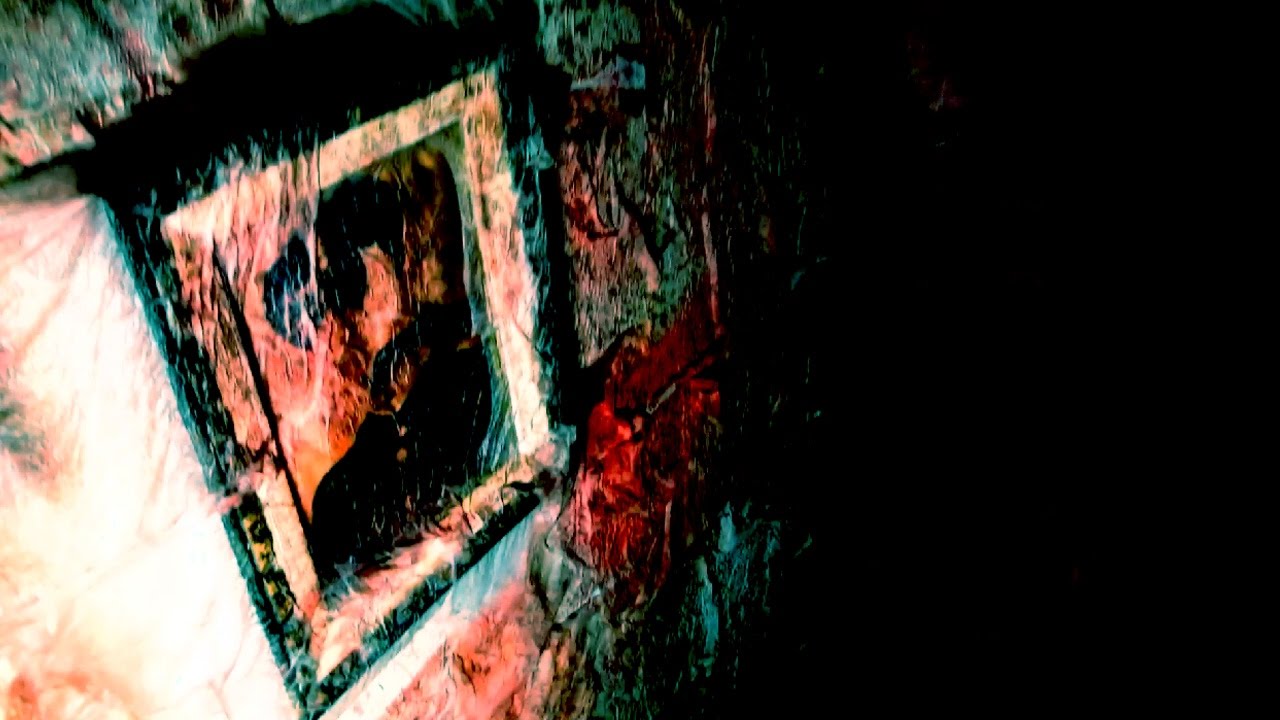
Figure 31: Piro Pito (2016) My House Walkthrough [video],YouTube.
Both are confined to a set path that progressively relinquishes control from the player/viewer. Although My House Walkthrough is a video, it has the same effect as P.T, being pulled through an anxiety-inducing path, uncertain of our surroundings. Looping in horror, in these examples, is used as a representation of a traumatic memory and purgatory, reliving events over and over.
CYBERROT is a looping experience for a similar purpose, to reflect the constant cycle of distrusting one’s perception of reality, trapped in an anxious, disassociated cycle. In the first three versions of CYBERROT, the loops are the same, I was looking at the monotony of the cycle. However, in the fourth iteration, the loop changes over time, progressively growing worse until it becomes a glitched mess before “rebooting”, providing an effective end rather than an endless loop.
Figure 32: Katelyn Ferencz (2023) CYBERROT: Install version 3 (snippet) [video]

The installations of CYBERROT are designed in the format of VR video, either 360 or 180 panoramic views. The first installation is an inverted 360 view, a circular arrangement of screens, designed to fit the center of the gallery as a kind of hub. Between the constant movement of the looping videos and audiences moving around the installation, a sense of a vortex is created pulling the audience into the work, a kind of dizzying effect. To simulate directional sound, 4-channel sound is used around the interior of the circle of two separate soundtracks interacting, at times a cacophony of noise and others harmonic. The following three installations were created as 180 simulated views across three data projectors due to the limitations of the space unable to facilitate 360 views. These projections are large-scale, towering over and surrounding the audience, transforming the room into a fully immersive space. I found that 5.1 surround sound had a greater effect on audiences able to feel the sound in their bodies, adding to the anxiety intended for the experience. These attempts to find out if immersive installation was as effective as an HMD, led to the present versions creating a juxtaposition between a VR HMD inside an immersive installation, in comparing a shared outer experience to an isolated inner experience.
Figure 33: Katelyn Ferencz (2023) CYBERROT: Layer 004: The Void [video still]

The VR experience takes place in Layer 004: The Void, a dark, fleshy cave system of dead-end tunnels and portals leading nowhere. Moving away from the external environments of the installation (the outer experience), the VR is an internal experience of being trapped in The Void. Taken through every tunnel searching for an exit, attempting to pass through bright portals, only to end up back in the center of The Void, like being spawned back into a game at the last save point after failing. This is to represent the futility of forcing oneself out of a deep dissociative episode.
Figure 34: Katelyn Ferencz (2023) CYBERROT:VR [360 video]
There are two instances where the viewer is glitched out into a deeper layer: Layer 006: Metal World. In this layer, the viewer is subject to harsh noise, trapped on a narrow, rusted metal platform, boxed in by chain-link fences in complete darkness other than a simulated flashlight, illuminating the path as they are moved forward. Looking behind, darkness engulfs the path they are on, before glitching back into The Void. On the second run-in with Metal World, the pace speeds up through a significantly longer path, with only one exit, a pit one must jump off into complete darkness, only to fall back into The Void to begin again.
This experience is based on darker subject matter, taking inspiration from the ‘Otherworld’ of Silent Hill 2 (Perron 2012:38). The narrative of Silent Hill 2 surrounds James Sunderland, a man trapped in a state of limbo, the town of Silent Hill, unable to ‘grasp the status of the terrorizing worlds (real and unreal)’ (Perron 2012:40). This non-existent place is James’ ‘own purgatory’ dug out of his disturbed subconscious mind as a coping mechanism after killing his wife (Kelly 2013). The ‘otherworld’ that takes over “reality” reflects James’ mental state as he nears his breaking point. Metal World is the deepest layer of CYBERROT, containing the darkest thoughts of severe anxiety disorder toward self-violence. These layers in the VR experience are for the express purpose of existing as the isolated experience of severe anxiety disorder, the parts we want to hide from the outside world.
Figure 35: Katelyn Ferencz (2023) CYBERROT: Layer 006: Metal World (ending) [video]


Figure 36: Konami Productions (2001) Silent Hill 2, James in the Otherworld Brookhaven Hospital [screenshot]
Figure 37: Konami Productions (2001) Silent Hill 2, A Mandarin climbing aunder wire mesh floor in Saul Street Passage [screenshot]
I’ve intentionally strayed from following the stages of VR immersion outlined in the 2013 IEEE symposium, instead leaning into ‘stage 4 – limbo’ where the ‘perceptual break between real and virtual is caused’ (Sproll et al). I believe that leading audiences seamlessly to transition into a VR experience goes against the conceptual significance of this project. The aim is to disrupt and disturb. Living in states of DR and DP is disruptive and frightening at times for what it can lead to. The goal is to cause separation from reality. I recognise I am not providing a chronic condition but a glimpse into how this state of mind can feel requires audiences to be uncomfortable. VR is the perfect tool for this research given that HMDs tend to cause discomfort and anxiety for many people. In the third version of CYBERROT, I played on the voyeuristic nature of VR by setting it up in the center of the installation. Because we cannot see outside reality while immersed, we become more aware of our bodies existing in the real world, perceived by others.
VR is a necessary tool for this research given its ability to 'create and inhabit different worlds from our everyday ones' and its capacity to put viewers into different ‘modes of embodiment’ (Levitt 2018). While the viewer’s sight is captured inside the display, their body is separated existing in and perceived by the outside world, potentially bringing about a sense of disembodiment akin to that of disassociation. In the third install of CYBERROT, this was highlighted by placing the VR headset center to the installation, playing on the voyeuristic aspect of wearing the HMD. Unfortunately, this trial was met with technical difficulties halting the disconnect from outside reality. Though, evident from feedback, coming out of the headset into the immersive installation meant audiences were still in an anxious state. To counteract this issue, the fourth version of the CYBERROT VR experience involves a disembodied voice guiding the viewer through playing the experience. The distorted CG voice whispers to the viewer to “remember their body” and contradicting statements such as “there’s nothing out there”, following the narrative text in the installation videos. Although the voice serves as a practical measure, I have worked to include it within the narrative following the thoughts experienced during disassociation where one is unable to trust their perception of reality.
bottom of page